
Transit Safety Crisis

Every incident. Captured and closed.

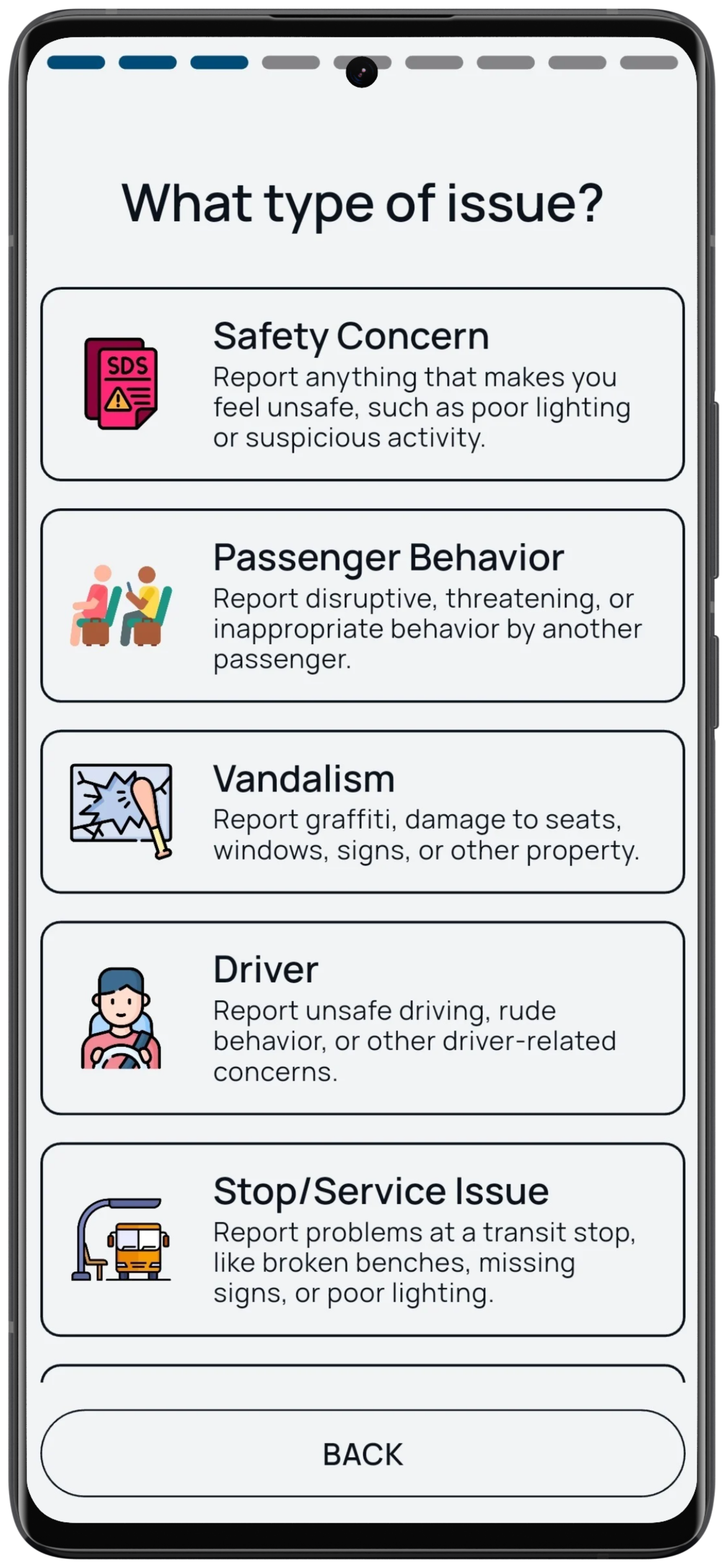
FlagTransit is real-time incident intelligence for transit agencies. Riders report in 30 seconds. Your team responds in minutes. Every action documented for compliance.

taskopiya-about-hero-Hand
Your advantage

Built for transit safety teams

FlagTransit handles the workflow from report to resolution so your team can focus on response, not paperwork.

databaseicon-1
Smart Routing

Auto-tags every report to the right team instantly safety issues to safety, assaults to security, cleaning to facilities.

AI Powered

AI-powered routing auto-tags every report to the right team with a step-by-step SOP checklist no guessing while our prediction algorithm shows you exactly where and when to station resources before incidents happen

Predictive

Our algorithm analyzes patterns to show you exactly where and when to station resources so you're proactive, not reactive.

taskopiya-about-banner
our features

Boost team productivity through streamlined workflows

Task Summary
Real-Time, Not Record-Only

Legacy systems record what happened. FlagTransit tells you what's happening now so you can respond before incidents escalate.

collaboration
Integrates With Your Stack

Seamlessly integrates with your existing CAD/AVL, dispatch, and analytics systems. Flag Analytics transforms raw operational data into clear, actionable insights helping agencies inform mission planning, optimize operations, track performance metrics, and make faster, data-driven decisions.

Why choose us

Turn your data into a strategic asset, helping to prevent and detect crime while Building public trust.

Vector (36)
Built for Transit

Purpose-built for buses, rail, and stations. Handles vehicle movement, cellular gaps, and multi-agency coordination out of the box.

Less IT Lift

QR codes on vehicles, cloud dashboard, mobile apps for field staff. Deploy in weeks, not months. No infrastructure required.

Unified View

Aggregate safety, security, and incident data across your transit ecosystem operators, riders, routes, facilities, and vehicles in one secure, centralized view.

Safety Story

Leverage a growing library of safety-first visualizations, including heat maps, trend analysis, and route-level risk mapping designed for executives, safety teams, and board reporting.

Why US

Why Agencies Choose FlagTransit

Connecting safety signals to real outcomes aligning dispatch, supervisors, and safety & security teams around proactive risk reduction, compliance, operator protection and rider protection.

Support Compliance with Confidence

Standardize workflows for FTA, ADA, Title VI, and internal SOPs reducing manual effort while improving documentation, accountability, and readiness.

One Unified Safety Platform

FlagTransit unifies rider reports, operator inputs, AI triage, and compliance workflows into a single safety platform. From real-time incident intake to investigation, documentation, and executive reporting, information flows end-to-end so decisions are faster, coordination is clearer, and risk is reduced.

kloudera-service-three-faq-image
Next Generation safety Automation

FlagTransit Safety streamlined Intelligence Flows

Inteligent Builder
Workflows
Predictive Modeling
Response Engine
Human
Rules

Agency Policies & SOPs
Safety Management System (SMS)
FTA,ADA, Title VI, EEO requirements
Local and Union constraints
Best-practice safety playbooks

Response Framework

Units, staffing and OCC roles
Response levels & escalations
Safety and security escalation levels
Coordination with security, maintenance, or LE Communications steps

Human-in-the-Loop

Supervisor review and confirmation
Modify, escalate, or veto recommendationsReal-time Situational context
Ensure policy and labor compliance
Maintain accountability and auditability

Frequently asked questions

Still Deciding? Start Here.

 How do riders submit feedback through FlagTransit?

We meet riders where they are—any language, any platform. They can use text, voice, email, or web to report issues. We auto-tag details like route, location, and time, so all they have to do is focus on what happened. The entire process takes under 30 seconds. This removes friction and dramatically increases the volume of feedback you receive compared to traditional comment cards or phone lines.

 What's the difference between customer service and customer experience?

Customer service is reactive—it responds when something goes wrong. Customer experience is proactive—it shapes the entire rider journey to prevent problems before they occur. FlagTransit enables both: immediate response to individual reports plus trend analysis that helps you identify systemic issues like recurring cleanliness problems on specific routes or peak-hour safety concerns. When you design for experience, you reduce the complaints that require service.

How does FlagTransit help us measure customer satisfaction?

The platform tracks key CX metrics in real time: CSAT scores, average response times, resolution rates, and feedback volume by category, route, and time period. You can filter by issue type (cleanliness, safety, ADA, harassment) to understand where satisfaction is strong and where it needs attention. As your documents note: "You cannot manage what you do not measure"

Can we use FlagTransit data for Title VI compliance reporting?

Yes. When demographic questions are embedded in your feedback surveys, you can cross-tabulate satisfaction results with Title VI variables. This reveals whether minority or low-income riders experience lower satisfaction on specific routes or service types—turning a compliance exercise into actionable equity insights. One data collection effort serves both customer experience and federal reporting requirements.

How does improving customer experience impact ridership and funding?

Rider perception of safety and reliability directly affects whether people choose transit. Agencies that demonstrate measurable improvements—shorter response times, higher resolution rates, increased satisfaction scores—build credibility with customers, boards, and funding partners. As one of your case studies showed, Toledo passed a transit sales tax on the second attempt specifically because leadership could show voters concrete outcomes rather than just asking for money. Performance builds trust, and trust attracts investment.

Microsoft Power Apps 2020
Power BI
Microsoft Sharepoint 2019
SQL